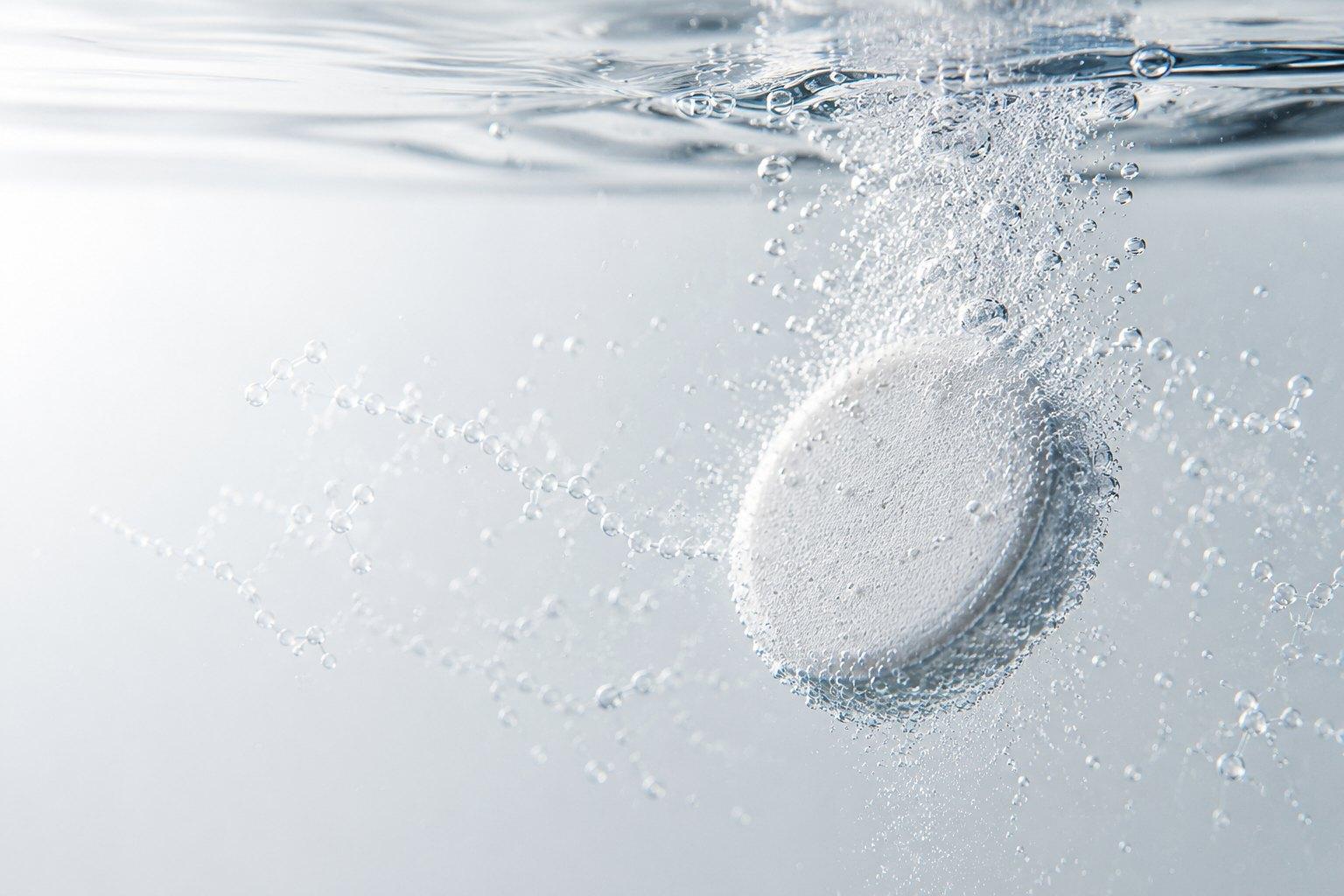
Product visual: an effervescent tablet dissolving beneath the water surface, releasing a column of fine bubbles

U.S. Patent 12,667,605 B2 granted · 30 June 2026Read the claim scope

First-of-its-kind effervescent oral peptide delivery technology.

Built on more than 35 years of pharmaceutical effervescence expertise and designed to support current and future peptide therapies for obesity, diabetes and metabolic disease. Combining decades of formulation innovation with nearly 20 years of oral peptide research.

$132Bn
annual global sales of GLP-1 therapies
~100%
semaglutide recovery in simulated gastric fluid with pepsin
37
claims granted in U.S. Patent 12,667,605 B2, June 2026
Phase 2a
completed for Merlin, oral insulin, in T1DM patients

The next chapter in oral peptide medicines.

The first generation of oral GLP-1 medicines demonstrated the value of oral administration, while underscoring the central challenge in peptide drug development: protecting large peptide molecules as they move through the gastrointestinal tract.

As obesity, diabetes and metabolic disease increasingly rely on peptide medicines, interest is growing in technologies that can support future generations of oral therapies.

BioLife's technology was developed to help address that challenge.

Oral delivery of peptides has failed on two barriers. OralMatrix is designed to answer both.

BioLife's technology is a proprietary effervescent peptide delivery technology formulated as a water-soluble oral dosage form: an effervescent tablet dissolved in water to create a buffered solution designed to help protect peptide medicines through the gastrointestinal tract. Rather than relying on special coatings or absorption-enhancing ingredients, the exemplified formulation requires no dedicated permeation enhancer and no protease-inhibitor chemistry.

Preclinical studies have demonstrated measurable systemic semaglutide exposure following oral administration, providing in vivo proof of concept for the approach, and results across the insulin and semaglutide programs support continued evaluation across additional peptide medicines.

Why effervescence?

BioLife's approach to oral peptide delivery was built on decades of expertise in pharmaceutical effervescence.

This experience provided the foundation for a different approach to peptide protection and delivery, combining formulation science with long-term innovation in oral dosage technologies.

The chemical barrier

Gastric acid and enzymes degrade the molecule

Stomach acidity and peptidases such as pepsin destroy unprotected peptides within the hour. OralMatrix creates a buffered microenvironment that preserves the molecule's chemical integrity through the gastrointestinal tract.

The physical barrier

Oral bioavailability is typically below 1%

Peptides cross the intestinal wall poorly, so most oral attempts deliver almost nothing systemically. OralMatrix is designed to release the peptide at its absorption site; systemic exposure has been observed in animals and in humans.

Fig. 1 · Mechanism of the OralMatrix buffer system

From dissolution to systemic circulation, in four steps

01 · Dissolution

Tablet in water

The effervescent tablet dissolves into a buffered solution carrying the peptide, taken 10–20 minutes before a meal.

02 · Gastric transit

Acid neutralized

The buffer holds the gastric medium at pH ~6.5 against a native pH of 1.2, inactivating pepsin's effect on the peptide.

03 · Release

At the absorption site

The peptide is designed to reach the intestine chemically intact and be released where absorption occurs.

04 · Exposure

Systemic circulation

Exogenous peptide is measurable in plasma, with dose-proportional exposure shown in human studies.

Mechanism as described in U.S. Patent 12,667,605 B2 and the company's clinical program.

Fig. 2 · In-vitro chemical integrity assay

Gastro-resistance of semaglutide in simulated gastric fluid

Measured pH of the gastric medium

pH 1.15
Measured pH
0%
API recovered

Without protection, semaglutide recovery in simulated gastric fluid with pepsin is 0%. The marketed oral comparator recovers 16.2% without pepsin and 0% with it.

Recovery and medium pH by formulation
ConditionOral comparatorOralMatrix
Without pepsin16.2%100%
With pepsin0%100%
Resulting pH of medium1.12–1.156.45–6.47

Comparator: marketed oral semaglutide (Rybelsus). Insulin shows the same behavior: approximately 101 IU preserved over 3 hours with OralMatrix versus 0 IU unbuffered. Company-sponsored studies; data have not been reviewed by a regulatory authority.

Two decades of research across insulin and GLP-1 therapies.

The technology has been evaluated through development programs involving both oral insulin and GLP-1 therapies, generating evidence across multiple peptide medicines.

Oral GLP-1 (semaglutide)
Type 2 diabetes mellitus and weight management, effervescent tablet
PreclinicalPhase 1Phase 2Phase 3

Lead priority · Phase 1 ready. In-vivo proof of concept completed in a non-rodent large-animal model.

Merlin · Oral human insulin
Type 1 diabetes mellitus, prandial (bolus) insulin replacement
PreclinicalPhase 1Phase 2Phase 3

Phase 2a completed. The subsequent clinical pathway is subject to regulatory alignment; the program aims to become the first oral insulin medicine to reach the market.

Oral GLP-1 (semaglutide)

  • In vitro. Full gastric protection of semaglutide, versus 0–16.2% recovery for the marketed oral comparator across pepsin conditions.
  • In vivo. Oral absorption demonstrated in a non-rodent large-animal model: Tmax at 1 hour, half-life of 47.5 hours, supporting clinical evaluation of less-frequent dosing.
  • Protection. U.S. Patent 12,667,605 B2 granted June 2026, including method-of-treatment claims.

Merlin

  • Patient studies. Safety, tolerability and efficacy signals observed in T1DM patients, fasted and fed, in a completed Phase 2a.
  • Population. 54M T1DM patients worldwide, plus up to 145M insulin-requiring T2DM patients.
  • Dose. Phase 1 pharmacodynamics plateaued at 750 IU, identifying the optimal single dose.
  • Field. The most advanced competing oral insulin recently discontinued its pivotal Phase 3, leaving Merlin among the few clinical-stage oral insulins with positive human data.

Beyond the disclosed programs: claim-protected molecule scope

Semaglutide(7-37) human GLP-1 analog, positions 8 and 34 substitutedLead API · Phase 1-ready program
ExenatideRecombinant exendin-4, DPP-4 resistantIn-vitro data · 93–98% recovery with pepsin at 2 h, versus 0% unbuffered
Liraglutide(7-37) analog, C16 fatty-acid acylation at position 26Within granted claim scope
Dulaglutide(7-37) GLP-1 fused to an IgG4 Fc fragmentWithin granted claim scope
Albiglutide(7-36) GLP-1 dimer fused to human albuminWithin granted claim scope
Lixisenatide44-amino-acid exendin-4 analogWithin granted claim scope

Beyond the incretin class, the foundational family (US 8,309,123 B2; FR 2925333) protects compositions of proteinaceous active ingredients broadly, of which Merlin's human insulin is the first clinical application. The depth of results across the insulin and semaglutide programs supports evaluation beyond a single molecule, for current GLP-1 pipelines and for future peptide development; applicability to additional peptides requires molecule-specific development and validation.

Human data first: a decade of development on the insulin program.

All results below are from completed, company-sponsored studies, led by Dr. Farid Bennis.

01
Preclinical programIn vitro · Wistar rats
Gastro-resistance confirmed; hypoglycemic activity preserved by the oral route.
02 · Belgium
Biolife-010Phase 1 · Healthy volunteers
Dose-proportional plasma exposure across 50–900 IU; peak concentration 1.8-fold higher, with a faster onset of action, than subcutaneous Actrapid.
03 · Belgium
Biolife-0102Phase 1 · Food effect
Fed-state pharmacokinetics mirrored endogenous insulin, with sustained glucose reduction up to 3 hours.
04 · Mauritius
Biolife-010TD1Phase 1b/2a · 24 T1DM patients
Significant reduction of postprandial hyperglycemia; pharmacodynamic effect extended over 4 hours; well tolerated.

Findings in patients

4h+

Extended effect

Glucose-lowering activity sustained over four hours post-dose, in fasted and fed states.

1–2

Injections replaced

A single Merlin tablet allowed patients to skip or reduce subsequent doses of rapid-acting injectable insulin.

Lower

Variability

Lower inter-patient PD variability than injectable Apidra, with a faster onset of action than Actrapid.

0

Serious adverse events

No deaths, SAEs or TEAEs leading to treatment discontinuation reported across the clinical program.

Development partners

The development program includes collaborations with leading research and development organizations: Charles River Laboratories, SGS, Eurofins/Amatsi and Cephac.

A granted U.S. patent now anchors the GLP-1 program.

On 30 June 2026, the United States Patent and Trademark Office granted patent 12,667,605 B2 to inventor Dr. Farid Bennis, titled Pharmaceutical composition for oral administration of a GLP-1 receptor agonist: 37 claims spanning methods of treatment, methods of preparation and kit-of-parts administration, with term running into 2042 including a 105-day term adjustment. The claims were granted over art of record that included the SNAC-based formulation behind the only marketed oral GLP-1.

Molecules recited
GLP-1 and the marketed receptor-agonist class · semaglutide, liraglutide, dulaglutide, albiglutide, exenatide and lixisenatide
Indications recited
Type 2 diabetes, obesity and non-alcoholic steatohepatitis (NASH, now termed MASH) · method-of-treatment claims granted
Formulation position
Exemplified formulations require no dedicated permeation enhancer such as SNAC and no enteric coating · a distinct mechanism from the marketed oral comparator
Term
Into 2042 · 20 years from the 2022 international filing, plus a 105-day adjustment

Fig. 3 · From the granted patent, Example 4

Residual semaglutide after 2 hours in simulated gastric medium, pH 1.2

UHPLC assay, patent Tables 3, 4 and 8. Source tables report 103.5–105.2% residual content for the buffered solution; shown here capped at 100%. When BioLife's buffer system was added to the marketed tablet itself, its protection was restored to 96.8%. Rybelsus is a registered trademark of Novo Nordisk A/S; the data describe in-vitro chemical stability, not clinical outcomes.

Patent family

US 12,667,605 B2Pharmaceutical composition for oral administration of a GLP-1 receptor agonistGranted · 30 June 2026
US 8,309,123 B2Compositions of proteinaceous active ingredients protected against digestive enzymesGranted · 2012
FR 3120189Oral GLP-1 compositionIssued · 2021
WO 2022/185155International (PCT) family for the GLP-1 compositionAdditional applications pending internationally
FR 2925333Foundational delivery-system filing for protein active ingredientsPriority filing · 2007

Request the complete patent and data package

News & media

BioLife publishes its patent, corporate, development and partnering announcements on this page. For media inquiries, business and licensing discussions, or approved materials, the contacts below are the direct route.

September 10, 2026

BioLife Secures U.S. Patent for First‑of‑its‑kind Effervescent Oral Peptide Delivery Technology

Preclinical studies demonstrate measurable systemic semaglutide exposure following oral administration; granted claims cover semaglutide and multiple GLP‑1 receptor agonists.

Read the full release

PARIS, France, September 10, 2026 – BioLife today announced that the United States Patent and Trademark Office has granted U.S. Patent 12,667,605 B2 for its novel effervescent oral peptide delivery technology, designed to support current and future peptide therapeutics for obesity, diabetes and metabolic disease.

The announcement comes as demand for GLP‑1 medicines continues to accelerate. GLP‑1 therapies generated approximately $132 billion in global sales in 2025, while obesity medicines now represent an estimated $42 billion market.1 As more patients seek alternatives to injections, demand for alternative oral treatments continues to grow.

First generation oral GLP‑1 medicines have demonstrated the value of oral administration while also underscoring the fundamental challenges in peptide drug development: protecting large peptide molecules as they move through the gastrointestinal tract.

BioLife’s unique technology was developed to explore what comes next. Built on more than 35 years of pharmaceutical effervescence expertise, this novel approach to oral peptide delivery uses a dissolvable effervescent tablet format that creates a first-of-its-kind gastric buffer designed to help protect peptide therapeutics through the digestive system and support their absorption.

“GLP‑1 medicines have changed how obesity and metabolic disease are treated, but we still need better oral options,” said Dr. Farid Bennis, Founder of BioLife and inventor of the technology known internally as OralMatrix. “This patent represents much more than protection for a formulation. It reflects decades of scientific work focused on addressing the most important challenges in peptide medicine: helping these molecules pass through the digestive system intact, for today’s therapies and for future generations of peptide therapeutics.”

The technology takes a different approach to oral peptide drug delivery. Rather than relying on special coatings or absorption-enhancing ingredients, it uses a dissolvable effervescent format designed to help protect peptide medicines as they move through the digestive system.

Preclinical studies have demonstrated measurable systemic semaglutide exposure following oral administration, providing in vivo proof of concept for the approach. The granted U.S. claims extend across the GLP‑1 class, including semaglutide, liraglutide, dulaglutide, albiglutide, exenatide and lixisenatide. Patent protection runs into 2042 with additional patent applications pending internationally.

Oral peptide drug delivery remains an important area of innovation as pharmaceutical companies evaluate increasingly sophisticated therapies for obesity, diabetes and metabolic disease. The opportunity extends beyond today’s GLP‑1 medicines and toward future generations of peptide therapeutics.

About the Technology

BioLife’s patented effervescent peptide delivery technology uses a dissolvable tablet format designed to support oral delivery of peptide medicines, including GLP‑1 therapies. Preclinical studies have demonstrated measurable systemic semaglutide exposure following oral administration.

The development programme builds on nearly 20 years of research, including human clinical studies with oral insulin formulations and collaborations with Charles River Laboratories, SGS, Eurofins/Amatsi and Cephac.

The technology is in development and is not approved for the treatment of any disease.

About Dr. Farid Bennis

Dr. Farid Bennis, eminent expert in effervescence research and technology, is the founder of BioLife, named inventor on U.S. Patent No. 12,667,605 B2, and Chairman of the pharmaceutical company Laprophan Group, established in 1949 and present in more than 40 countries.

Over more than 35 years, Dr. Bennis has developed pharmaceutical effervescence technologies across multiple therapeutic areas, resulting in numerous patented inventions and commercialized healthcare products. The technology reflects nearly two decades of work devoted to oral peptide delivery.

About BioLife

BioLife develops oral delivery technologies for peptide medicines, combining expertise in pharmaceutical effervescence, formulation science and oral peptide research.

The company’s technology portfolio and related patent estate have been independently developed and are wholly owned.

Media & Partner Enquiries

US: Peter Opitz
608‑712‑9614
Europe: Misha Talheth‑Fells
+44 7548 907984
Business & Licensing: Paul Sagan
617‑852‑0495
LaVoie Strategic Communications Group, Inc.
biolife@lavoiegroup.com

Sources

1 Managed Healthcare Executive, “GLP‑1 Drugs to Drive Growth in Obesity and Diabetes Treatment,” reporting IQVIA market data presented at AMCP Annual 2026. Available at: managedhealthcareexecutive.com

Contacts

US / EU media

Peter Opitz

popitz@lavoiegroup.com

Business & licensing

Paul Sagan

psagan@lavoiegroup.com

A media kit containing the approved press release, BioLife boilerplate, Dr. Bennis's biography and headshot, and approved technology imagery is available on request.

Metabolic medicine's largest categories, still dominated by the needle.

As pharmaceutical companies invest heavily in obesity, diabetes and metabolic disease, interest continues to grow in technologies capable of supporting future generations of peptide medicines. BioLife believes oral delivery will remain an important area of innovation across these categories. 537 million people live with diabetes today, projected to reach 738 million, and the great majority of insulin and GLP-1 products remain injectable.

$132Bn

GLP-1 therapies, annual global sales

As more patients seek alternatives to injections, demand for oral treatments continues to grow.

$30Bn

Insulin market today

Toward a projected $41Bn, with an $18Bn fast-acting segment as Merlin's target and roughly 200M addressable patients. No oral insulin is approved anywhere in the world.

$42Bn

Obesity medicines market

An estimated annual market, with GLP-1 therapies at its center and oral options still the exception.

The human burden

6.7M
deaths attributed to diabetes globally in a single year
1 / 5 sec
one death every five seconds worldwide
10–15 yrs
of life expectancy lost versus healthy peers
1 in 2
people who need insulin cannot access or afford it

Sources: IQVIA market data as reported by Managed Healthcare Executive (AMCP Annual); Fortune Business Insights; Global Market Insights; IDF Diabetes Atlas (10th edition); WHO.

35 years of pharmaceutical effervescence expertise.

Dr. Farid Bennis has spent more than three decades developing pharmaceutical effervescence technologies across multiple therapeutic areas, resulting in numerous patented inventions and commercialized healthcare products.

What began as a long-term focus on pharmaceutical effervescence evolved into nearly two decades of research devoted to oral peptide delivery.

The technology reflects the latest stage of that journey.

A platform company with a single scientific conviction.

Chronic disease is managed every day, and daily medicine should not require a needle. BioLife develops oral delivery technologies for peptide medicines, combining expertise in pharmaceutical effervescence, formulation science and oral peptide research. What follows is what the public record can verify.

The platform

Provenance

Two decades of continuous inventive work

The delivery system's patent lineage runs unbroken from a 2007 priority filing to the 2026 U.S. grant. Every claim on this page traces to a granted document.

Ownership

Independently developed, wholly owned

The company's technology portfolio and related patent estate have been independently developed and are wholly owned.

Platform reach

Indication-agnostic by design

Results generated across the insulin and semaglutide programs support continued evaluation across additional peptide medicines, each requiring molecule-specific development and validation. Diabetes is the entry point; the granted GLP-1 claims already recite obesity and NASH.

Manufacturing

Conventional, GMP-suitable production

A conventional, non-sterile wet-granulation and compression process, reproducible batch to batch and potentially simplifying finished-product production. The buffer system draws on excipients listed in the European Pharmacopoeia.

The people

Founder & named inventor · Chairman, Laprophan Group

Dr. Farid Bennis

An eminent authority in effervescence research and technology, with more than 35 years devoted to the effervescent dosage form across multiple therapeutic areas, and nearly two decades of its application to oral peptide delivery. Doctor of Pharmacy, University of Montpellier; decorated with the Légion d'honneur, France's highest order of merit. Named inventor on U.S. Patent 12,667,605 B2, and Chairman of Laprophan Group, a pharmaceutical company present in more than 40 countries, with numerous patented inventions and commercialized healthcare products to his credit.

Selected granted inventorship

A quarter-century of effervescent invention

Effervescent oral compositions of phloroglucinol (EP 1178787 B1; US 6,716,884). Colloidal bismuth preparation (US 6,699,912, granted 2004). Buffered oral delivery of protein active ingredients (FR 2925333 family; WO 2009/083686; US 8,309,123 B2, granted 2012). Buffered oral administration of GLP-1 receptor agonists (US 12,667,605 B2, granted 2026).

In the estate

One continuous line of invention

Dr. Bennis's name runs through every family in the OralMatrix estate, from the 2007 priority filing to the 2026 U.S. grant, joined by co-inventors along the way. The platform is a continuous body of work, carried from formulation bench to granted method-of-treatment claims by a team that has stayed with it.

Research, development & regulatory

A senior scientific bench, with the platform for more than a decade

Development is led by a molecular pharmacologist trained at UCLouvain in cellular and molecular pharmacology, with two decades in academic and industrial pharmaceutical development, supported by scientific advisory carrying four decades of industrial pharmacy and general management.

A granted U.S. patent on oral GLP-1, and a completed Phase 2a in oral insulin. One platform stands behind both.

Scientific & strategic inquiries
BioLife engages with pharmaceutical companies, researchers and strategic partners interested in oral peptide delivery technologies and future peptide medicines. A non-confidential overview and supporting materials are available upon request.
contact@biolife.bio
BioLife will use the information you provide to respond to your inquiry and, where requested, provide relevant materials. Please see our Privacy Notice for information about how we handle personal data.